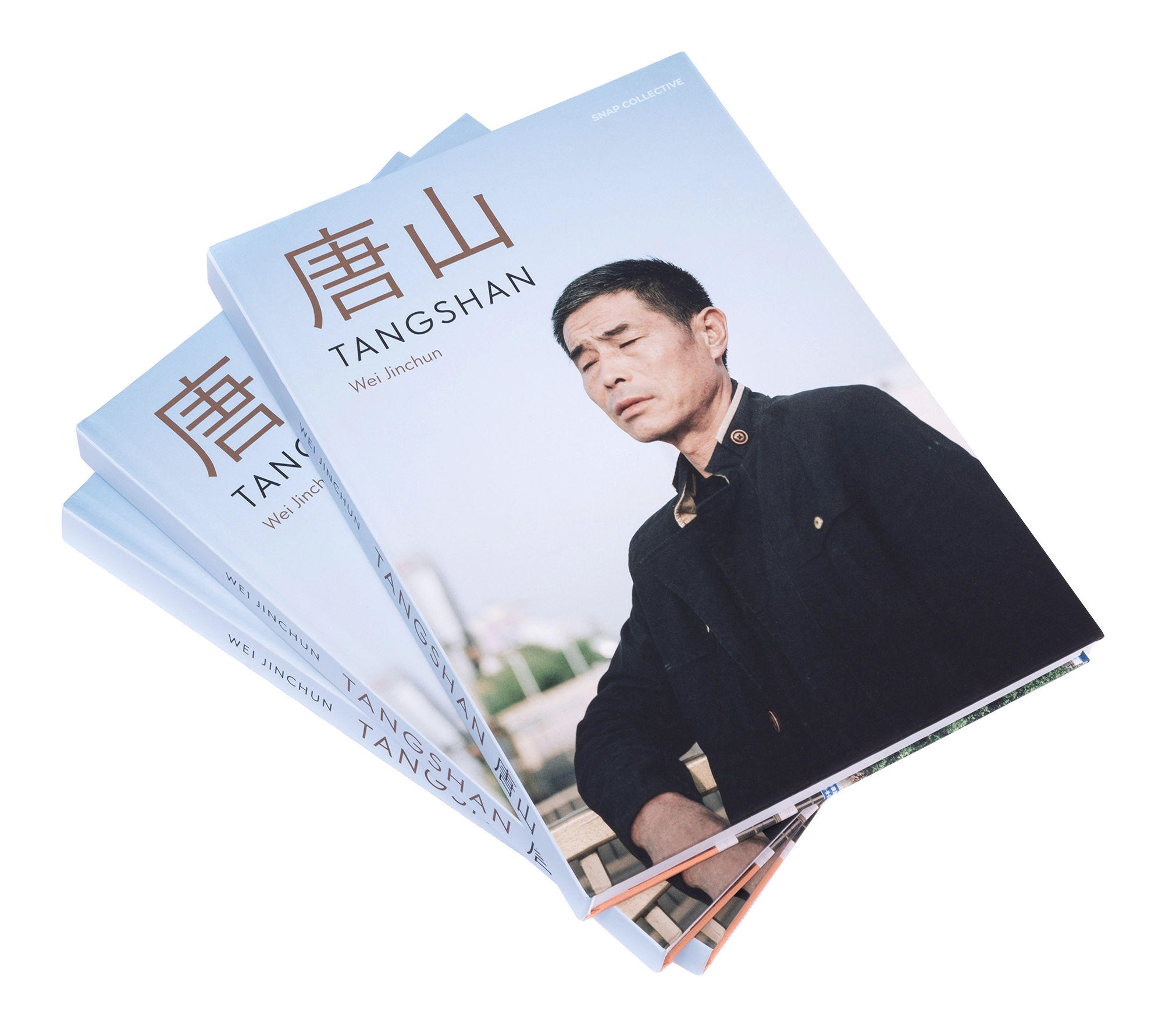
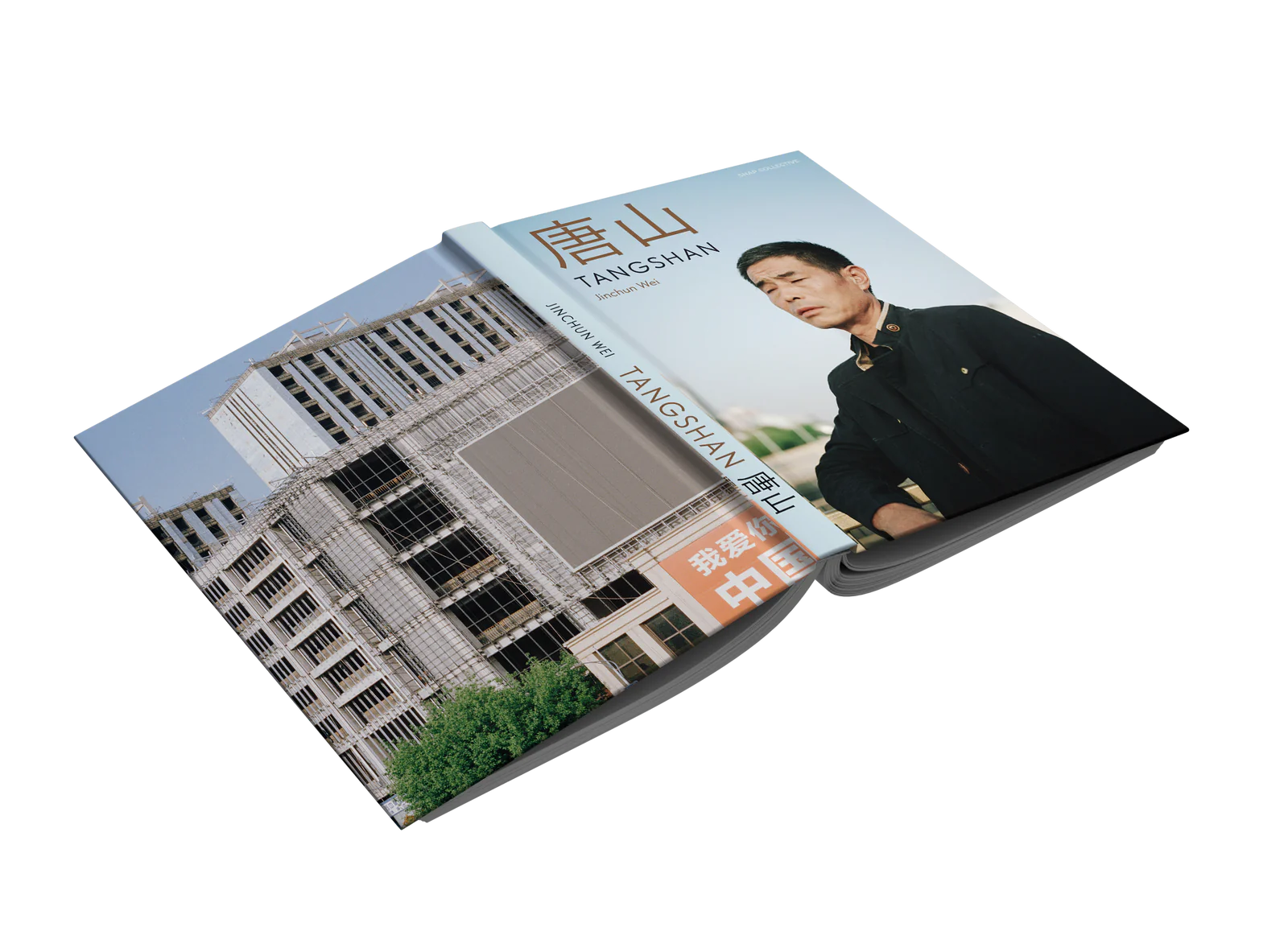
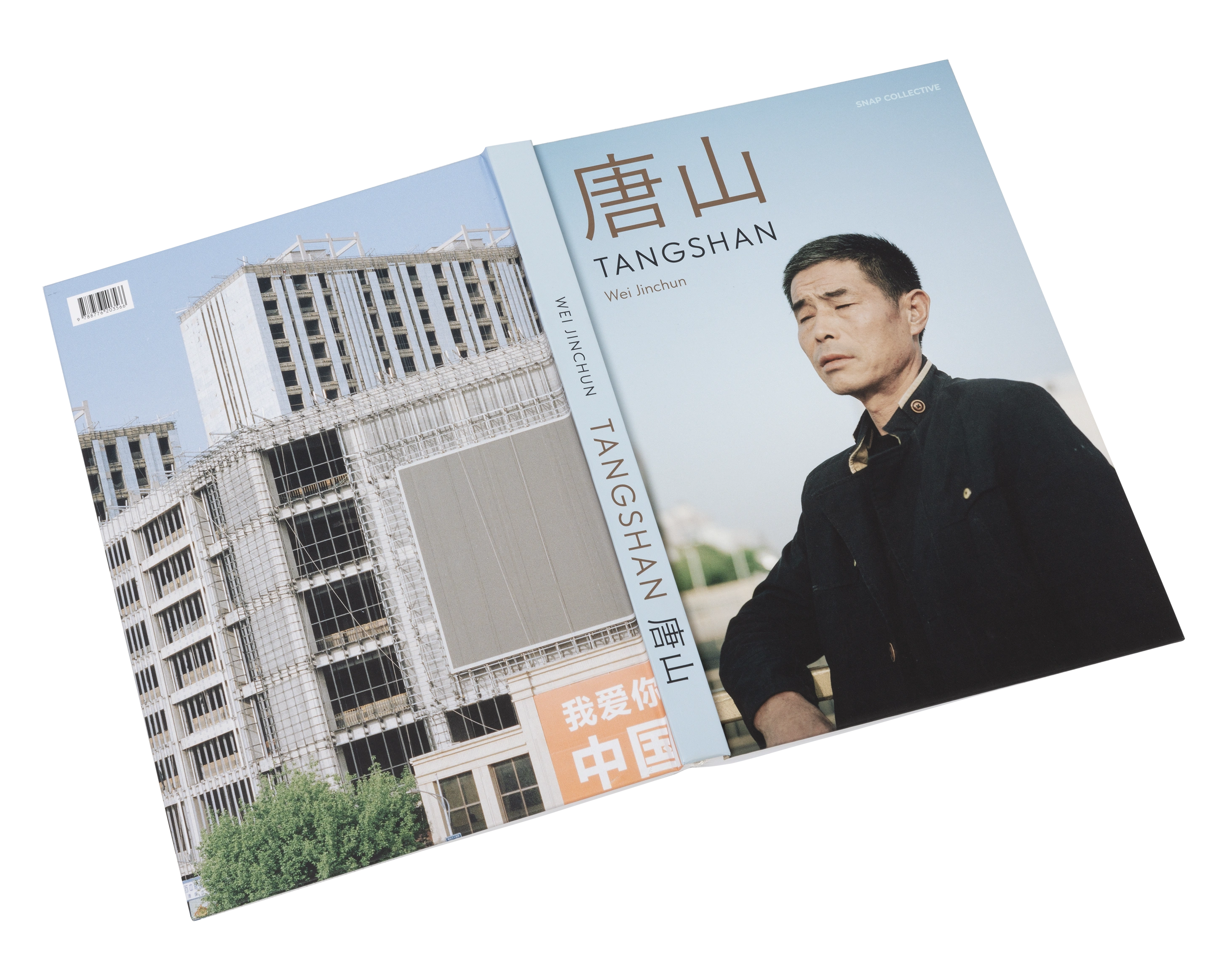
Tangshan
Artist: Wei Jinchun
ISBN: 978-87-7620-356-6
Publisher: Snap Collective
Website: www.snap-collective.com
Editorial Assistant: Natalia Manole
Designer: Elena Bidnenko
Publication date: September 2, 2024
Category: Art
Price: €129
Languages: Chinese and English
Project Statement:
In late March 2023, I travelled to Tangshan, Hebei Province, with several of my graduate-school roommates. One roommate, who is from Tangshan, told us that today’s picturesque Nanhu Park had once been a mining area. He told us that after the earthquake, many of the victims had been buried beneath this area, while rubble from the destroyed city was brought here and piled into mounds. Against this history, the lake and surrounding landscape seemed charged with the weight of the past, their beauty becoming more complex under the burden of memory.
Standing on a hillside at night, I saw countless rows of light poles in the distance, standing like sentinels and shifting through harsh reds, purples, and blues, as if innumerable eyes were watching the land through the darkness. Wind rippled the lake, which reflected an uncanny violet light at dusk; ground lights flickered across the trunks of the surrounding trees, in a rhythm that seemed almost like the breathing of the earth. That night, Nanhu Park ceased to be simply a landscape. It became a point of contact between me and Tangshan’s history, as though the ground beneath my feet contained countless stories and voices from the past.
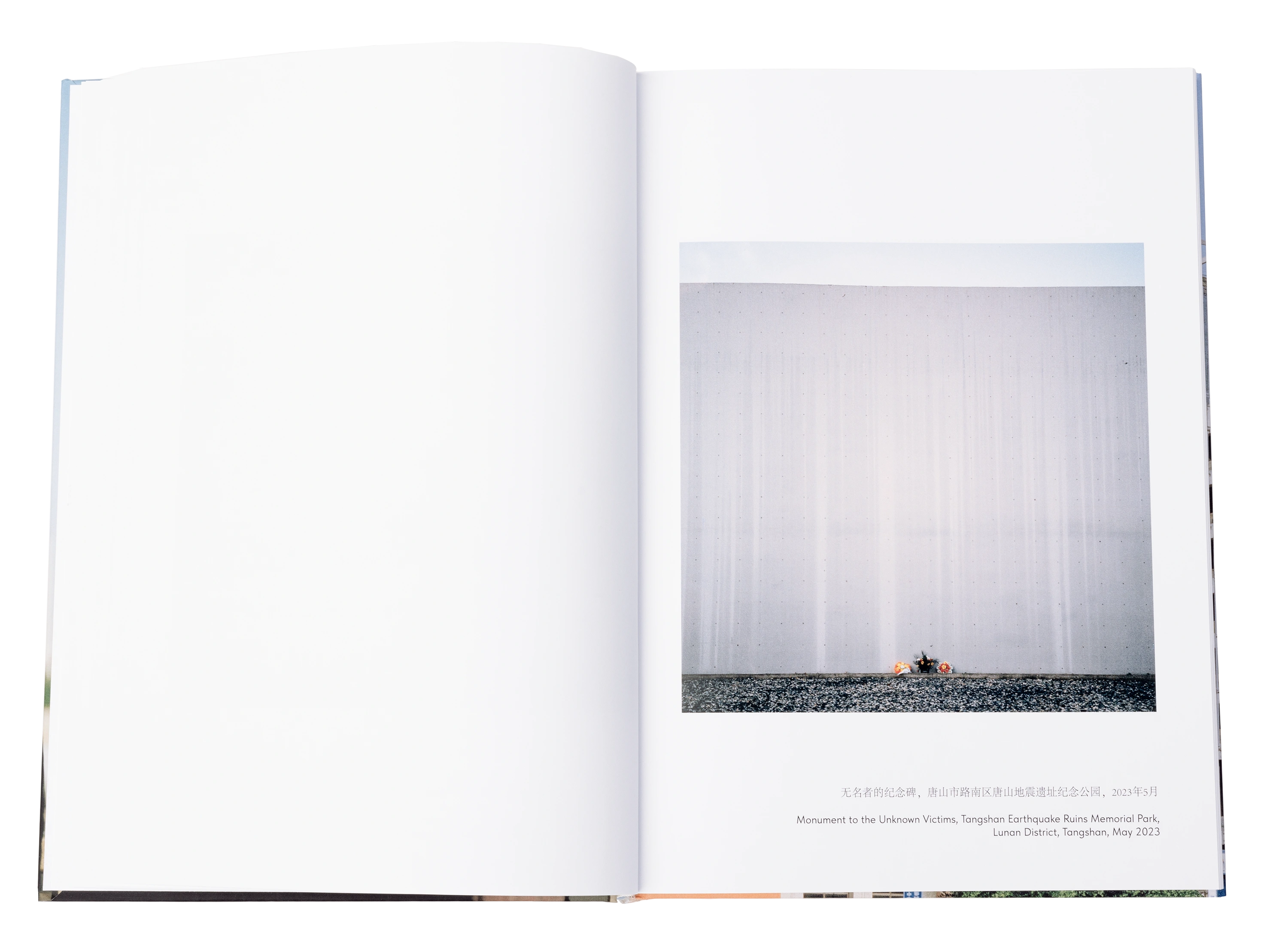
Visiting the Tangshan Earthquake Museum and the Tangshan Earthquake Memorial Park, I felt a gravity that was difficult to articulate. The fragility of life became tangible, while the trauma endured by the city seemed to speak through silence. Each encounter with the memorial walls inscribed with the names of those who died carried a sense of reverence and grief.
The year before I began photographing, Tangshan had drawn nationwide attention following a violent assault at a barbecue restaurant. As surveillance footage of the incident triggered an overwhelming wave of public empathy, history seemed to revisit the city in a different form. The destruction of 1976 exposed human vulnerability before the violence of nature; the rupture of 2022 measured the difficulty of a society governed by law in confronting human cruelty. A monument bearing the title “National Civilized City,” once a symbol of civic pride, still stands alone in the square outside Tangshan Railway Station. With these conflicted feelings about the city’s history and present, I began a year-long photographic project using a Rolleiflex twin-lens reflex camera. Through the camera’s particular rendering and way of seeing, I sought to register the marks left on the city by different moments in time. As the work developed, my understanding of Tangshan became increasingly layered and complex.
From Dachengshan, I looked down over Tangshan, where dense high-rises presented the image of a “new” city. At the summit, a headless bodhisattva stood in the harsh backlight of the sun, appearing desolate against the heat. On Fengshan, I found religious statues locked inside a cave—neglected icons, unattended yet silently watching over the land. From the mountain, the vast cuts left by mining resembled scars in the earth, marking a past that had not fully healed. At an abandoned mine near Douhe Reservoir in Kaiping District, animal bones lay scattered among architectural ruins. To me, they became an image of the city’s present condition: a city rebuilt from the rubble of an earthquake, now confronting the pressures of economic transition. Long known as a “city of steel,” Tangshan has been reshaped by environmental policy and economic restructuring. At a hot-rolling steel plant in Zunhua, enormous cooling towers and factory walls were painted with idyllic scenes of “lucid waters and lush mountains.” Here, environmental imagery became a kind of fig leaf for industry. History and the present overlap throughout Tangshan, and these recurring signs and fragments of memory have shaped my particular impression of the city. Tangshan is now moving through the painful process of industrial transition, searching for a new direction amid an imbalance between economic and cultural development. Its uncertainty and hope, resilience and struggle, are what I seek to examine through photography.